Case Study: VITAL AI
The Unified Health Companion

The Problem
Health management today is fundamentally fragmented. The average health-conscious consumer juggles three to four separate apps to track nutrition, fitness, sleep, and mental wellness. None of them talk to each other. This fragmentation creates three critical failures that no single-domain app can solve.
First, users miss cross-domain patterns that drive their health outcomes. Poor sleep triggers sugar cravings, which spikes stress, which disrupts the next night's sleep. That cascading relationship is invisible when sleep lives in one app, food in another, and mood in a third. The connections that matter most fall into the gaps between products.
Second, tracking fatigue kills retention. Every additional app is another login, another interface to learn, another daily habit to maintain. Users start strong and quietly abandon tools one by one. The data that could have helped them disappears with each uninstalled app.
Third, the advice they receive is generic. A fitness app doesn't know the user slept four hours. A nutrition app doesn't know the user is in perimenopause. A meditation app doesn't know the user ran a half marathon yesterday. Without the full picture, every recommendation is a guess dressed up as guidance.
Meanwhile, over 1.1 billion women globally are navigating perimenopause and menopause — a population experiencing symptoms that span every health domain simultaneously. Hot flashes, sleep disruption, mood swings, weight changes, cognitive fog, joint pain. Mainstream health technology has largely ignored them, treating menopause as a niche concern rather than a universal life stage affecting half the population.
The result is a $72 billion digital health market filled with point solutions but no unified intelligence layer that sees the whole person.
The Approach
Xymera built Vital AI around a single core insight: health domains are deeply interconnected, and an AI that can see across all of them will deliver insights that no single-domain app ever could.
The unified data model captures everything in one place. Food, exercise, sleep, mood, stress, symptoms, habits, menopause indicators, and biometrics flow into a single comprehensive health graph per user. This isn't just data aggregation — it's the foundation for cross-domain pattern detection that is architecturally impossible in siloed apps. When the AI can see that caffeine intake after 3 PM correlates with a 22% reduction in deep sleep, which correlates with elevated stress the following morning, which correlates with poor food choices at lunch — that's an insight chain no combination of separate apps could ever surface.
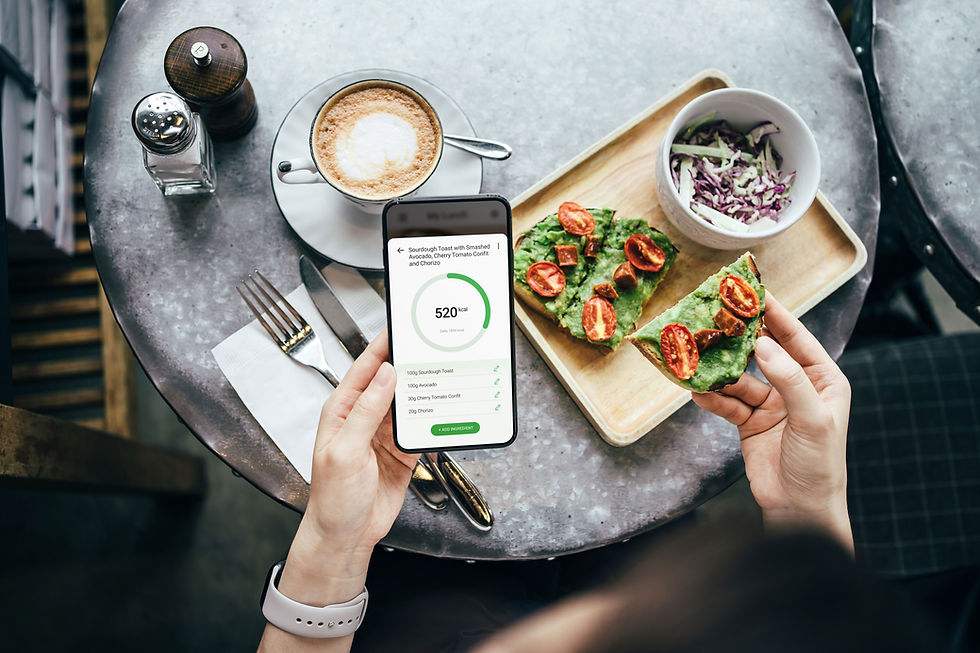
To reduce friction, Vital AI rethinks input entirely. Users can log meals by snapping a photo, speaking, or typing, with AI estimating full nutritional profiles in seconds. When confidence is low, it asks follow-ups instead of guessing—turning a tedious process into a quick, intuitive interaction.
Menopause support is built in from the start, with dedicated tracking for symptoms, hormonal changes, and their impact on sleep, mood, and overall health. The AI coaching layer uses all collected data to generate personalized, context-aware guidance—grounded in the user’s actual patterns, not generic advice.
Safety is embedded at the system level. The platform detects crisis signals, avoids medical or diagnostic claims, and provides resources like the 988 Lifeline when needed. Every response includes transparent confidence scoring, ensuring users understand both the insight and its limitations.
The Result
Vital AI delivers what the digital health market has been missing — a single application that unifies six health domains under one AI intelligence layer capable of detecting patterns that siloed competitors structurally cannot see.
The cross-domain insight engine represents a genuine capability gap in the market. MyFitnessPal has a large food database but no sleep data, no mood data, and no AI coaching layer. Oura Ring captures excellent sleep and recovery metrics but requires dedicated hardware and doesn't track nutrition or mental wellness. Calm and Headspace offer strong meditation content but exist in complete isolation from physical health data. Noom provides behavior change coaching but runs scripted programs rather than real AI personalization from actual user data. Apple Health aggregates data passively but offers no proactive intelligence or coaching layer on top of it. Menopause-specific apps like Balance and Caria focus on hormonal health but isolate it from the full health picture.
No competitor occupies the intersection of comprehensive multi-domain data and genuine AI intelligence. That intersection is Vital AI's moat, and it deepens with every user interaction as the insight engine accumulates more data to find more patterns.
The AI-first input model directly attacks the retention problem that plagues health apps. Three-second photo-to-nutrition logging removes the friction that causes users to abandon traditional calorie counters within weeks. Voice and text alternatives ensure accessibility across contexts — logging a meal while cooking, commuting, or eating with friends becomes effortless rather than intrusive.
The safety architecture sets a standard the industry hasn't demanded yet but will. As AI health tools proliferate, the gap between products that treat safety as a feature toggle and products that bake it into every layer of the system will become a regulatory and liability differentiator. Vital AI is built for that future.